

Hexachlorocyclohexane (HCH) contamination represents one of the most persistent global legacies of lindane (γ-HCH) production. The manufacture of one tonne of lindane historically generated 10–12 tonnes of unwanted HCH isomers (α-, β-, δ-, and ε-HCH), commonly referred to as “HCH muck.” While high-concentration dumps have often been incinerated, large volumes of surrounding soils, sediments, groundwater, construction materials, and agricultural land remain low-contaminated but environmentally hazardous.
These high-volume, low-level contaminated matrices pose a major remediation challenge:
1. Persistent β-HCH is highly recalcitrant.
2. Residual contamination continues to leach into groundwater.
3. Large-scale excavation and incineration are economically and environmentally unsustainable.
There is therefore an urgent need for economical, scalable, and field-validated biological
remediation technologies specifically tailored for residual HCH contamination.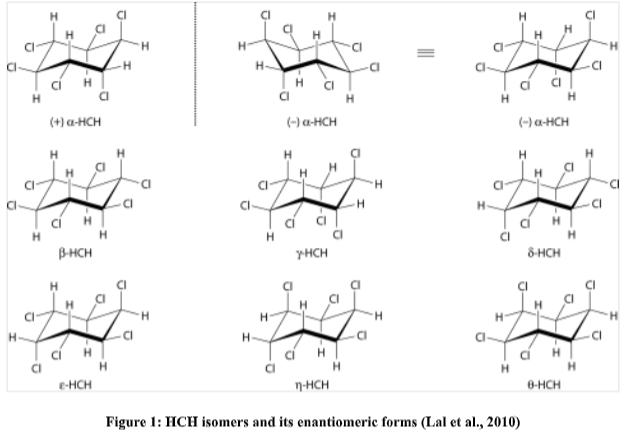
Our group has been at the forefront of HCH research for over three decades and is internationally recognized for pioneering work on:
1. Molecular genetics and enzymology of HCH degradation (lin genes: linA, linB, linC etc.)
2. Genome sequencing and comparative genomics of HCH-degrading bacteria
3. Metagenomic mining of functional variants from contaminated dumpsites
4. Stable isotope-based tracking of in situ HCH biodegradation
5. Pilot-scale bioaugmentation strategies
This sustained leadership is reflected in:
a. Several peer-reviewed publications and ~13,000 citations
b. Principal Investigator roles in multiple national and international HCH-focused projects (DBT, DST, Indo-Swiss, Indo-Australian collaborations)
c. Coordination of the DBT-funded project on Remediation and reclamation of HCH dumpsite by microbial bioremediation technology (2018–2021)
d. Organization of international conferences on HCH bioremediation
e. Ambassador of the International HCH and Pesticide Association (IHPA)
Our work spans from gene-level understanding to field-scale validation, uniquely positioning us for translational deployment.
For over a decade, we have worked at one of the largest HCH dumpsites in India, containing massive quantities of HCH waste generated between 1997 and 2010.
The site provides:
1. Real-world low-to-moderate contamination gradients
2. Long-term monitoring datasets
3. Access to agricultural soils, sediments, and groundwater systems
4. A controlled environment for pilot-scale microbial intervention
This platform allows direct translation from laboratory optimization to scalable field implementation.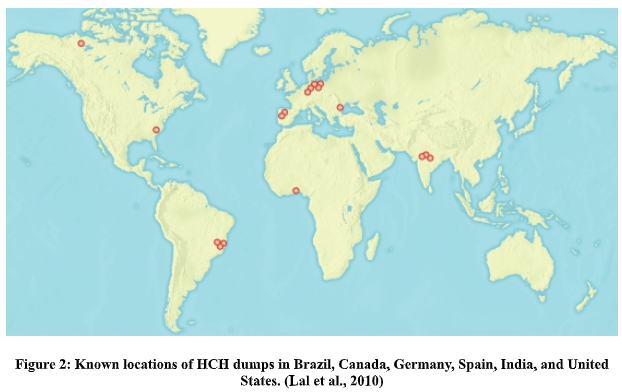
We propose to develop and validate an economical microbial remediation platform for high-volume, low-contaminated materials, including :
1. Agricultural soils with residual HCH contamination
2. Subsurface soils post-incineration
3. Construction debris and concrete
4. Low-level contaminated wastewater
Core components:
1. Optimized microbial consortia enriched for α-, β-, and δ-HCH degradation
2. Metagenomic and transcriptomic monitoring tools for performance validation
3. Bioaugmentation and biostimulation strategies tailored to soil matrices
4. Field-deployable monitoring using compound-specific isotope analysis (CSIA)
5. Cost-benefit and scalability modelling for industrial deployment
Our approach differs from conventional strategies in that it:
1. Targets residual, low-level contamination rather than only high-concentration dumps.
2. Integrates genomics, enzymology, and ecological monitoring.
3. Builds on long-term site-specific datasets.
4. Moves beyond proof-of-concept to demonstrable field-scale implementation.
5. Prioritizes economic feasibility and minimal ecological disruption.
This work directly addresses:
1. Persistent contamination affecting agriculture and groundwater
2. Carcinogenic and endocrine-disrupting effects of β-HCH
3. Long-term remediation costs for industry and governments
4. Global environmental sustainability commitments
Successful validation at the Indian site would enable replication at similar legacy dumpsites worldwide.
To access HCH publications and our group’s research work, please visit:
ruplal.in