

Housed at PhiXgen Pvt Ltd.
The International Microbial Literacy Initiative (IMiLI) is a global effort dedicated to
promoting microbial literacy and enhancing public understanding of the fundamental role of
microorganisms in sustaining life on Earth. IMiLI works toward reshaping the public narrative
around microbes—from a predominantly disease-centric perception to a holistic understanding of
microbes as essential drivers of ecosystem services, human health, agriculture, biotechnology,
climate resilience, and planetary sustainability.
The IMiLI–South Asian Centre (IMiLI-SAC) functions as a non-profit academic initiative
within Phixgen Pvt. Ltd. While the IMiLI website and major IMiLI educational resources are
technically maintained within Phixgen Pvt. Ltd., all outreach programmes, lectures,
workshops, conferences, and community engagement activities are conducted under the
banner of IMiLI–SAC as part of its non-profit microbial literacy mission.
IMiLI-SAC serves as a regional hub for South Asia, translating the global IMiLI vision into
sustained grassroots action.
For more please visit: IMiLI-SAC
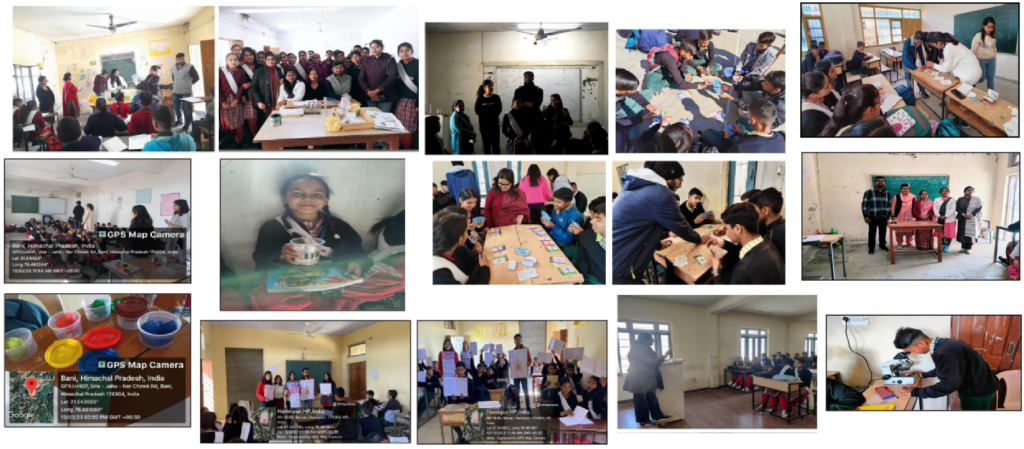
These initiatives specifically target rural and first-generation learners, aligning microbial
science with sustainable living and environmental awareness.
Bani School Innovation Camp (BaSIC I–VI) – Government Senior Secondary School,
Bani, Himachal Pradesh
BIᴓSCOPE (I–III) – School enrichment programs in rural Himachal Pradesh
UDGAM (I-III) – INSA Outreach Programme school engagement initiative
Microbial literacy sessions in schools in Delhi, Noida, and Himachal Pradesh
Poster competitions (World Microbiome Day, International Microorganism Day)
Hands-on awareness sessions: “Educate the Children, Secure the Future”
A. Genomics, Metagenomics & Bioinformatics Capacity Building
Pre-conference workshops on:
o Genomics & Metagenomics in Microbial Ecology
o Computational Biology for (Meta)Genomics
o Bioinformatics for Beginners
National Workshops on Microbial Genomics and Metagenomics
Academia–Industry certificate courses in computational biology
Add-on courses for UG/PG students that bridge cutting-edge microbial genomics with
practical training.
b. Scientific Writing and Communication Workshops
Under IMiLI-SAC and Ambassador programmes:
“Art of Scientific Writing and Communication” workshops
Workshops on publishing in high-impact journals
Science communication workshops across India (Delhi, Assam, Odisha, Tamil Nadu,
Punjab, Gujarat, Uttarakhand, etc.)
Training sessions on responsible science and publication ethics
7th & 8th International Conferences of INSCR under IMiLI-SAC
Conferences on “Modulating the Environment with Microbes”
“Exploring the Microbial World: Human Health and Environmental Sustainability”
Indo-Swiss and Indo-Australian meetings on bioremediation
International HCH & pesticide forums
UN-SDGs (how microbes can help achieve 17 Sustainable Development Goals)
Microbial ecology and climate discussions
Environmental biotechnology training
One Health and planetary sustainability frameworks
IMiLI-SAC operates through:
1. INSA Senior Scientist initiatives
2. International Society for Microbial Ecology (ISME) collaborations
3. Federation of European Microbiological Societies (FEMS) Ambassador programmes
4. Association of Microbiologists of India (AMI)
5. Indian Network for Soil Contamination Research (INSCR)
6. Phixgen Pvt. Ltd. (technical and resource support)
IMiLI-SAC represents a structured regional implementation of the global IMiLI mission. It integrates:
a. Academic excellence
b. International collaborations
c. Grassroots outreach
d. Genomic-era microbial science
e. Capacity building
f. Public engagement
Through sustained outreach, workshops, conferences, and school-level interventions, IMiLI-SAC seeks to create:
1. Scientifically informed citizens
2. Responsible science communicators
3. Skilled young microbiologists
4. Environmentally conscious communities
The guiding philosophy remains:
“Microorganisms rule life on Earth — understanding them is essential for sustainable living.”
IMiLI-SAC continues to expand its footprint across South Asia by linking advanced microbial
genomics with public literacy, ensuring that microbiology serves not only laboratories and
journals but also classrooms, communities, and policy discourse.
District Hamirpur, Himachal Pradesh
Established: 1905
Visit Date: 21 February 2026
Outreach visit as part of an academic engagement initiative.
Visitors included: C. L. Kaushal, Rup Lal, Sukanya Lal, Reecha, Prof. Christof Holliger (EPFL, Lausanne, Switzerland), and Mrs. Helen Holliger.
The visit was both academic and deeply personal — a homecoming across four generations.
Ram Chander (maternal grandfather) – Primary education (1915)
C. L. Kaushal – Matriculation (1957)
Rup Lal & Savitri Devi – Passed out (1969)
Roshani Devi – Passed out (1971)
Bal Krishan – Passed out (1975)
Mukesh Kumar (Professor, IIT Roorkee) – Passed out (1980)
Several nephews later studied at the same institution.
Morning prayer assembly reflected discipline and institutional continuity.
Major structural changes observed:
Former volleyball and kabaddi ground altered.
Old Principal’s office building removed.
Ber trees and bushes behind the school no longer present.
Water tank near banyan tree missing.
The banyan tree remains — symbolizing institutional legacy and continuity.
The school provided foundational values: discipline, confidence, and academic grounding.
Outreach and academic interaction programme.
Organized by:
1.Dr. Rajneesh Kanwar
2.Ms. Rashmi Kanwar
Expression of gratitude to Principal Shri Rajesh Kumar, faculty, and students.
District Hamirpur, Himachal Pradesh
Visit Date: 21 February 2026
Well-structured institutional programme.
Cultural performances by students.
Strong academic interaction and student participation.
Demonstrated progressive transformation of rural education.
Represents modern private educational development in rural Himachal Pradesh.
Symbolizes the educational evolution of Bani as an emerging academic hub.
Visit of Prof. Christof Holliger (EPFL, Lausanne) highlighted international academic linkage.
Emphasized education as a bridge between rural India and global scholarship.
Gratitude extended to PPISS administration, teachers, and students for their hospitality and professionalism.